
Does Infrared Sauna Burn Calories
Yes, sitting in an infrared sauna does burn calories. To answer the question immediately: while lounging in the soothing warmth of an infrared sauna is not a direct substitute for a rigorous gym session, it does cause a modest, measurable increase in your body’s calorie expenditure. As your core temperature rises from the deep-penetrating infrared light, your body works harder to cool itself down. This physiological effort increases your heart rate, boosts your circulation, and elevates your metabolic rate, resulting in extra calories burned. However, it is vital to understand that this is a supplementary benefit to a healthy lifestyle, not a magic solution for rapid fat loss.
Infrared saunas have taken the wellness world by storm, celebrated for a myriad of health benefits including deep detoxification, stress relief, enhanced muscle recovery, and improved longevity. Yet, the connection between infrared therapy and weight loss remains one of the most frequently discussed topics. If you are wondering how you can leverage this technology to support your fitness and weight loss goals, you are in the right place. Below, we provide a comprehensive, deep-dive exploration into the science of infrared saunas, how they impact your metabolism, and how to seamlessly integrate them into your holistic wellness journey.
1. What Is the True Mechanism: Does an Infrared Sauna Burn Calories?
To truly understand what happens inside an infrared sauna, we must look at how the body responds to heat. When it comes to traditional weight loss, the primary drivers are always going to be your dietary habits, your physical activity levels, your overall lifestyle choices, and your genetic predispositions. However, adding an infrared sauna to your routine acts as a catalyst, adding a bit of extra fuel to your calorie-burning engine.
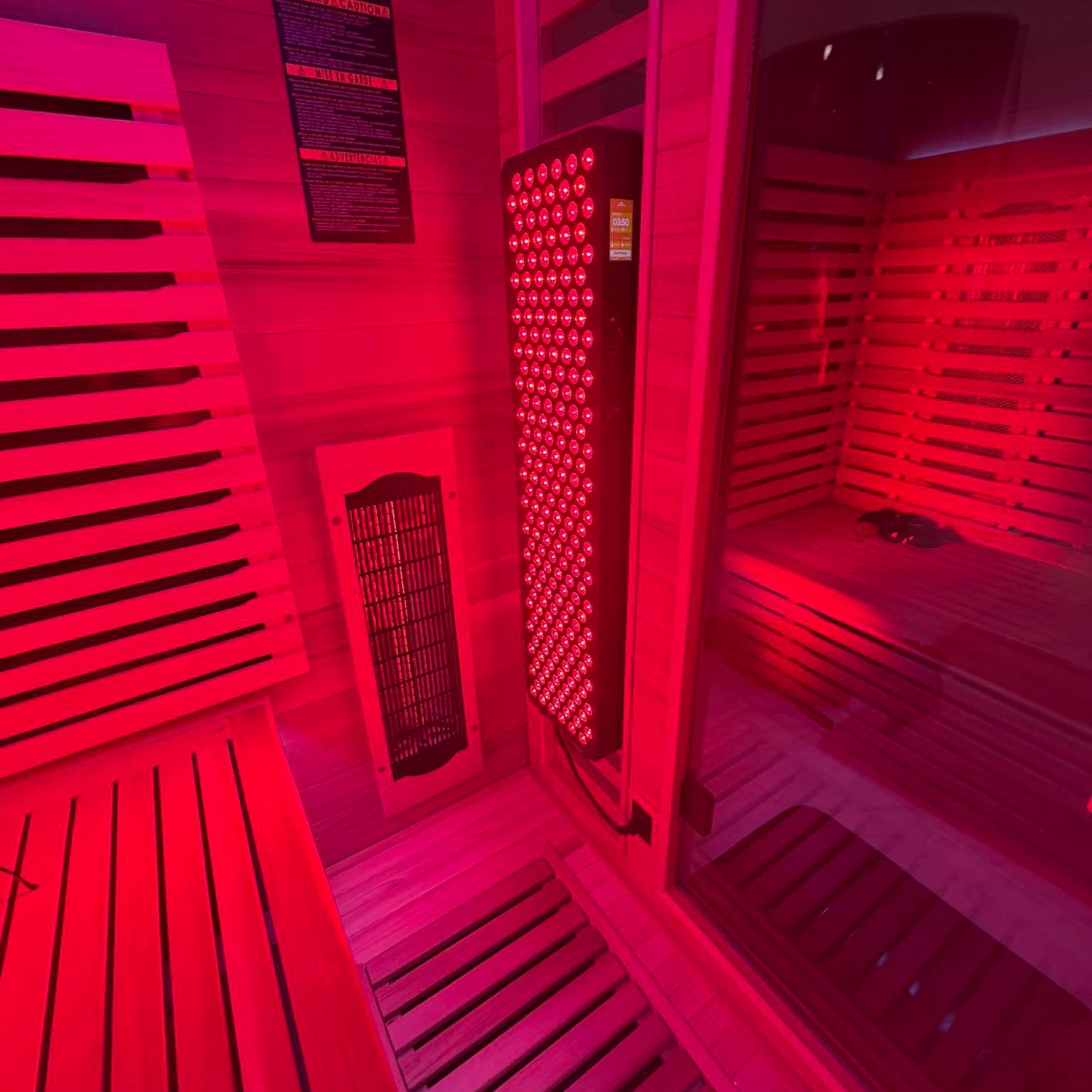
Traditional saunas rely on heating the air around you to extreme temperatures, which in turn heats your body. Infrared saunas operate entirely differently. They use specialized panels to emit infrared light—a safe, invisible spectrum of light that penetrates deep into your skin, muscles, and tissues. Instead of making the ambient room uncomfortably hot and difficult to breathe in, infrared light heats your body directly from the inside out.
As the infrared waves penetrate your body, your core temperature gently begins to rise. Your body's natural cooling mechanism kicks into high gear to maintain homeostasis (internal balance). To cool you down, your heart pumps faster, pushing blood toward the surface of your skin, and your sweat glands activate. This internal workload requires energy. Because your body is actively expending energy to regulate its temperature, you are burning calories, even while sitting completely still.
2. How Do Infrared Saunas Burn Calories and Mimic Physical Activity?
The way your body reacts to the deep, penetrating heat of an infrared sauna is remarkably similar to how it reacts to light or moderate physical exercise. When you are exposed to continuous infrared light, a cascade of biological responses is triggered:
- Increased Heart Rate and Cardiac Output: As your core temperature climbs, your cardiovascular system must work harder. Your heart rate can elevate to levels similar to what you might experience during a brisk walk or a light cycling session. This increased cardiac output forces your body to consume more energy.
- Elevated Metabolic Rate: Metabolism is the process by which your body converts what you eat and drink into energy. Heat stress temporarily increases your basal metabolic rate (BMR). Because your system is working overtime to initiate sweating and pump blood, your metabolic furnace burns slightly hotter.
- Profuse Sweating and Thermoregulation: While the act of sweating itself is primarily a vehicle for releasing toxins and regulating temperature rather than directly burning fat, the process of producing that sweat and pushing it out of the pores requires caloric energy.
It is a simple equation: increased physiological effort equals increased energy expenditure. The result is a modest but genuine calorie burn.
3. Why Are Infrared Saunas Frequently Called a "Passive Workout"?
You will often hear wellness experts and medical professionals refer to an infrared sauna session as a "passive workout" or a "passive cardio boost." But why is it given this title?
Think of traditional exercise as an active workout: your muscles are contracting against resistance, your joints are moving, and you are consciously exerting force. An infrared sauna session provides a passive workout because you achieve some of the cardiovascular benefits of exercise without the mechanical stress on your muscles and joints. You are entirely at rest, yet your internal systems are jogging.
Research has shown that the physiological strain of sitting in an infrared sauna provides a significant boost in energy expenditure. For individuals who are injured, recovering from intense physical exertion, or dealing with mobility issues, this passive cardiovascular engagement is incredibly valuable. However, candor is important here: while you are engaging similar physiological responses, you are not building muscle mass or improving your biomechanical strength. The calorie burn is real, but it should be viewed as a complement to your fitness routine, not a replacement for moving your body.
4. Who Can Benefit Most from the Calorie-Burning Effects of an Infrared Sauna?
Because the calorie burn from an infrared sauna is generated through passive heat stress rather than active mechanical movement, a wide variety of individuals can benefit from incorporating this therapy into their lives:
- Fitness Enthusiasts and Athletes: For those who already work out regularly, the sauna acts as an exceptional tool for active recovery. The increased circulation delivers oxygen-rich blood to depleted muscles, speeding up recovery time while simultaneously providing a mild metabolic boost on rest days.
- Individuals with Mobility Limitations: For those suffering from joint pain, arthritis, or injuries that prevent traditional cardiovascular exercise, infrared saunas offer a safe way to elevate the heart rate and burn a few extra calories without exacerbating physical pain.
- People Managing High Stress: High levels of cortisol (the stress hormone) can actively prevent weight loss and encourage fat storage, particularly around the midsection. The deep relaxation provided by an infrared sauna lowers cortisol levels, creating a more favorable internal environment for healthy weight management.
- Wellness Seekers Looking for an Edge: If you already eat a balanced diet and engage in moderate exercise, the extra caloric expenditure from a 30-to-45-minute sauna session a few times a week can provide that slight metabolic edge to help you reach your goals.
5. When Should You Use an Infrared Sauna to Maximize Your Calorie Burn?
Timing your sauna sessions can play a role in how you experience the benefits, though consistency is ultimately the most important factor.
- Post-Workout Sessions: Using an infrared sauna immediately after a workout can theoretically extend the "afterburn" effect of your exercise. Your heart rate is already elevated from your workout, and entering the sauna keeps that cardiovascular engagement going, potentially leading to a higher overall calorie expenditure for the day.
- On Rest Days: Using the sauna on days you do not exercise is a fantastic way to keep your metabolism gently revved and your blood circulating, ensuring your body stays active internally while your muscles recover externally.
- Evening Wind-Down: Because infrared saunas promote the release of endorphins and help lower cortisol, an evening session can improve sleep quality. Better sleep is intrinsically linked to better metabolic health and more effective weight management.
6. Where Does Water Weight Fit Into the Sauna Weight Loss Equation?
This is perhaps the most critical misconception to clear up regarding saunas and weight loss. Where does the immediate drop on the scale come from?
It is highly likely that if you weigh yourself immediately before and immediately after an infrared sauna session, you will see a reduction in your overall body weight. However, it is essential to ground our expectations in reality: the vast majority of this immediate weight loss is water weight.
As your body sweats profusely to cool itself down, it is expelling water. Once you step out of the sauna and properly rehydrate by drinking fluids—which is absolutely mandatory for your health and safety—that specific water weight will return. You did not melt away two pounds of adipose tissue (body fat) in 40 minutes.
The true, long-term weight loss benefits of infrared saunas do not come from sweating out water. They come from the sustained, consistent metabolic boost, the stress reduction, and the enhanced recovery that allows you to perform better in your active workouts. Infrared therapy supports your overall wellness routine; it is not a shortcut to fat loss.
Additional Feature 1: The Physiology of Heat Stress
To further understand the calorie-burning potential of infrared saunas, we can look closer at the concept of "heat stress." When the body is subjected to a controlled, heated environment, it undergoes thermoregulatory strain.
During this process, blood vessels dilate (vasodilation) to allow more blood to flow to the surface of the skin, where heat can be released through sweat evaporation. This massive redirection of blood flow requires the heart to work significantly harder. In fact, some studies suggest that during a robust sauna session, cardiac output can increase by as much as 60% to 70%. Pumping that much extra blood around the body is an energy-intensive task. The calories burned during this process are mostly derived from the energy required to maintain this heightened cardiovascular state and the energy required by the sweat glands to secrete fluid.
Additional Feature 2: Building a Holistic Wellness Routine
Infrared saunas are powerful, but they operate best synergistically. If you want to maximize your calorie burn and overall health, you must pair your sauna sessions with other healthy habits.
- Nutrition First: You cannot out-sauna a poor diet. Ensure you are consuming whole foods, lean proteins, healthy fats, and complex carbohydrates to fuel your body correctly.
- Hydration is Non-Negotiable: Because you are losing fluids rapidly in a sauna, you must replace them. Drinking water infused with electrolytes (like sodium, potassium, and magnesium) before, during, and after your session ensures your body can continue to function optimally and maintain its metabolic rate.
- Consistent Physical Activity: Use the sauna to complement your gym sessions, not replace them. Weight lifting builds muscle (which burns more calories at rest), and active cardio strengthens the heart mechanically.
Frequently Asked Questions (FAQs)
Q1: Exactly how many calories can I expect to burn in an infrared sauna session?
The exact number of calories burned varies drastically from person to person. It depends entirely on your current body weight, your resting metabolic rate, the temperature of the sauna, and the duration of your session. While some aggressive marketing claims suggest you can burn up to 600 calories in a single session, realistic scientific estimates place the burn closer to what you would achieve during a brisk 30-minute walk—roughly 150 to 300 extra calories.
Q2: Can I target and lose belly fat by sitting in an infrared sauna?
No. Spot reduction—the idea that you can lose fat in one specific area of your body by applying heat or exercise to it—is a biological myth. An infrared sauna increases your overall metabolic rate and energy expenditure, which can contribute to a caloric deficit. When you are in a caloric deficit, your body will lose fat globally, including from your belly, but the sauna itself does not selectively melt fat from specific areas.
Q3: How often should I use an infrared sauna to see weight loss benefits?
Consistency is key. For general wellness and to support a weight loss routine, using an infrared sauna 3 to 4 times a week for 30 to 45 minutes per session is a widely recommended protocol. However, always listen to your body. Start with shorter sessions (15-20 minutes) at a lower temperature to see how your body reacts before building up your tolerance.
Conclusion: A Powerful Tool for Your Wellness Journey
Do infrared saunas burn calories? Yes, they absolutely do. By elevating your core temperature, increasing your heart rate, and prompting your body to work hard to cool itself down, infrared saunas provide a genuine, scientifically supported metabolic boost. They mimic the physiological responses of light cardiovascular exercise, making them an excellent "passive workout."
However, maintaining a realistic perspective is crucial. The dramatic weight loss seen immediately on the scale post-sauna is simply water weight that must be replenished. True, sustainable weight loss requires a comprehensive approach. Infrared saunas are not a substitute for a nutritious diet, nor are they a replacement for the mechanical benefits of lifting weights or going for a run.
Instead, view an infrared sauna as a powerful, restorative supplement to your overall wellness lifestyle. When combined with mindful eating, regular physical activity, and adequate hydration, an infrared sauna can help you reduce stress, recover faster between workouts, and provide that extra caloric burn to support your long-term weight-loss goals. With scientifically proven technology, stepping into the gentle warmth of an infrared sauna might just be the perfect addition to your health and fitness routine.