
How Long Does a Sauna Take to Heat Up
If you are wondering exactly how long you need to wait before stepping into your personal oasis, the straightforward answer is that a properly sized and insulated traditional sauna takes between 30 to 45 minutes to heat up to an optimal temperature. If your sauna is routinely taking over an hour, there is a distinct gap between its current performance and its true potential, and that gap has an underlying, solvable reason.
We will cover heat-up times categorized by sauna type, the underlying physics of thermal saturation, the specific factors that dictate your room's performance, and the actionable steps you can take to achieve faster, more efficient heating.
Key Takeaways to Keep in Mind:
- The 30-to-45-Minute Baseline: A correctly sized electric sauna heater operating in a well-insulated room will consistently bring the environment to a working temperature in 30 to 45 minutes.
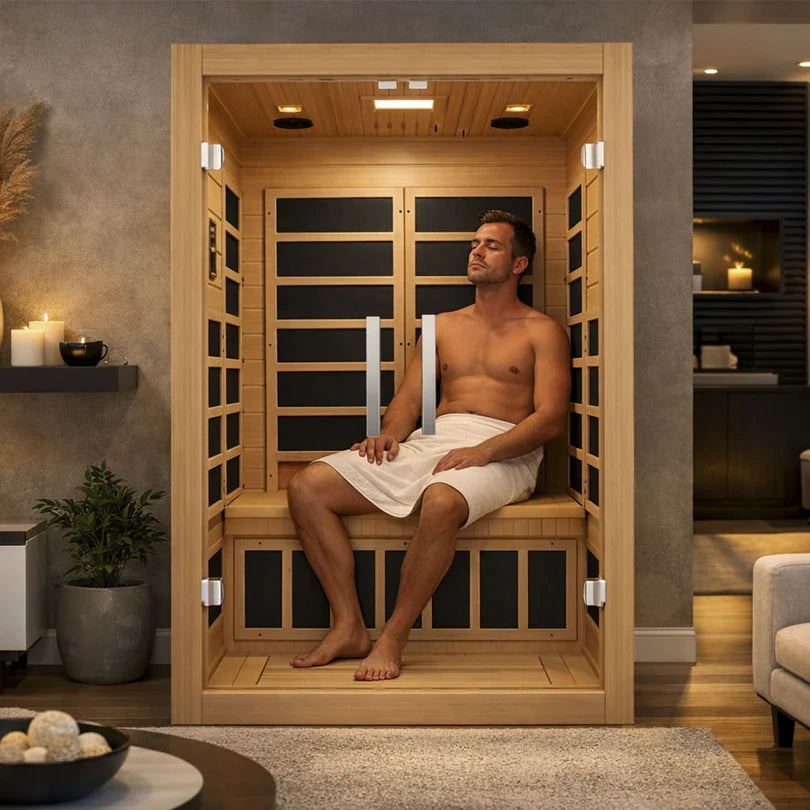
- Infrared Efficiency: Infrared saunas utilize entirely different heating mechanics, warming the body directly rather than the ambient air, allowing them to reach optimal operating conditions in just 10 to 20 minutes.
- Wood-Burning Variability: Wood-fired stoves are subject to the highest degree of variability. Depending on firebox management, draft quality, and ambient outdoor temperatures, they can take anywhere from 30 minutes to over an hour.
- The Sizing Crisis: The single most prevalent reason for agonizingly slow heat-up times is a heater that is fundamentally undersized for the cubic volume and thermal characteristics of the room.
- Thermal Saturation vs. Air Temperature: The air inside your sauna will heat up much faster than your sauna stones. Relying solely on a wall thermometer will not give you an accurate picture of whether the sauna is truly ready for traditional steam (löyly).
What Is the Average Heat-Up Time for Different Sauna Types?
To properly evaluate whether your sauna is functioning correctly, you must first understand the baseline expectations for your specific type of equipment. Comparing an infrared cabin to a traditional wood-fired outdoor barrel is akin to comparing a microwave to a conventional oven; they rely on fundamentally different mechanisms to achieve their goals.
Most traditional saunas require 30 to 60 minutes to reach a state of full thermal readiness. Electric heaters, assuming they are appropriately calibrated to the room's dimensions, comfortably land in the 30 to 45-minute window. Infrared models, however, are ready in a fraction of that time, typically requiring only 10 to 20 minutes. The actual performance of your unit will always be a complex interplay between raw heater power, spatial volume, insulation efficacy, and the ambient climate.
Comprehensive Heat-Up Times by Sauna Category
| Sauna Classification | Typical Heat-Up Time | Target Temperature Range | Technical Notes & Characteristics |
|---|---|---|---|
| Electric Sauna (Indoor) | 30 to 45 minutes | 158 to 194°F | The most common residential configuration; highly consistent. |
| Wood-Burning (Indoor) | 30 to 60+ minutes | 158 to 212°F | Heavily dependent on wood species, moisture content, and draft. |
| Infrared Sauna Cabin | 10 to 20 minutes | 104 to 140°F | Utilizes electromagnetic radiation to heat human tissue directly. |
| Electric Barrel Sauna | 30 to 45 minutes | 158 to 194°F | The cylindrical architecture naturally aids in convective heat distribution. |
| Wood-Fired Barrel Sauna | 45 to 60+ minutes | 158 to 212°F | Outdoor exposure to wind and ambient cold significantly impacts times. |
| Portable / Tent Sauna | 15 to 30 minutes | 122 to 158°F | Minimal internal volume and lower target temperatures allow for speed. |
| Steam Room / Hammam | 15 to 20 minutes | 104 to 122°F | Relies on 100% relative humidity; perceived heat is high despite low air temps. |
Understanding these categories changes the entire conversation regarding sauna performance. A traditional electric heater is tasked with heating the air, the wooden walls, the benches, and a massive load of stones. An infrared unit is simply tasked with powering up its emitter panels. Evaluating your sauna's speed requires contextualizing it within its specific technological framework.
How Do You Know When Your Sauna Is Fully Heated?
A common misconception among new sauna users is that the room is ready the moment the wall thermometer reaches the target temperature. In reality, the air temperature is only half of the thermodynamic equation.
When a sauna heats up, energy is transferred to the air via convection and to the stones and wooden surfaces via conduction and radiation. The air, having a very low thermal mass, heats up rapidly. The stones, however, possess a high thermal mass and require significantly more time to absorb and store energy.
In physics, the amount of heat energy ($Q$) required to change the temperature of an object is expressed by the formula:
$$Q = mc\Delta T$$
Where:
- $m$ is the mass of the material (the stones).
- $c$ is the specific heat capacity of the material.
- $\Delta T$ is the desired change in temperature.
Because the mass ($m$) of a typical load of olivine diabase sauna stones is substantial, and their specific heat capacity requires immense energy absorption to reach equilibrium with the surrounding air, the stones will lag behind the air temperature by 15 to 20 minutes.
If your air thermometer reads 176°F but the stones have not yet reached full thermal saturation, ladling water onto them will result in a weak, highly localized hiss of steam that dissipates immediately. This does not produce the enveloping, intense wave of heat known in Finnish culture as löyly. For an electric heater bearing a standard stone capacity, achieving complete stone saturation generally takes closer to 50 minutes.
The Practical Saturation Test:
To verify if your sauna is truly ready, splash a small amount of water directly onto the stones. If the resulting steam billows forcefully, expands rapidly, and hangs in the air, your stones are fully saturated. If the reaction is a sharp, short sizzle and the steam vanishes instantly, the stones require more time to absorb energy.
Target Temperatures to Keep in Mind
- Traditional Finnish Saunas: The benchmark range is 158 to 194°F. Purists and seasoned bathers often prefer environments at or above 176°F, which creates the optimal thermal conditions for robust steam generation when water is applied.
- Infrared Saunas: The functional range is much lower, between 104 to 140°F. The ambient air temperature is secondary; the primary mechanism is the infrared wavelengths penetrating the skin to induce sweating from within.
- Steam Rooms: Operating temperatures range from 104 to 122°F. While this sounds low, the near 100% humidity prevents the evaporation of sweat, creating a fiercely intense perception of heat on the skin.
Why Is My Sauna Taking Too Long to Heat Up?
When a sauna that should take 35 minutes suddenly takes 70 minutes, or a newly installed sauna fails to hit its targets, frustration sets in. Through careful analysis of sauna mechanics, we can identify the most frequent culprits responsible for sluggish performance.
1. The Undersized Heater (The Sizing Deficit)
This is the absolute most common issue. If your heater was never properly scaled to the cubic volume of the room, no amount of maintenance will solve the problem. An electric heater operates on a simple ratio: generally, you need 1 kilowatt (kW) of power for every 45 to 50 cubic feet of highly insulated interior space.
If you place a 4.5kW heater in a room demanding an 8kW unit, the heater will run continuously. It will never reach the high-limit threshold required to cycle off, and it will permanently struggle against the room's natural heat loss. This not only results in an uncomfortably cool sauna but also drastically inflates your electrical consumption as the unit draws maximum amperage without pause.
2. Degraded or Failed Heating Elements
Inside an electric sauna heater are metal resistor elements—typically Incoloy or stainless steel—that convert electrical current into immense heat. Over years of thermal expansion, contraction, and exposure to water, individual elements can crack or burn out.
Because electric heaters often contain three to six separate elements, the failure of one does not stop the machine from functioning. The heater will continue to run and produce heat, but it is now operating at a permanently reduced output (e.g., a 6kW heater might only be outputting 4kW). If your heat-up times have gradually lengthened over several months or years, checking the elements for continuity using a multimeter is the next logical step.
3. Compromised Stone Condition
Sauna stones are subjected to brutal extremes. They are superheated to hundreds of degrees and then shocked with cold water, repeatedly. Over time, even premium stones like peridotite or vulcanite will undergo thermal spalling—micro-fracturing that causes them to slowly crumble.
As stones break down, they settle densely into the heater. This compacted rock dust and rubble eliminates the crucial air gaps between the stones. Without these voids, convective air currents cannot flow upward past the heating elements. The elements become smothered, overheating themselves while failing to transfer heat into the room. Inspect your stones annually; if they are chalky, cracked, or compacted, they must be replaced.
4. Hidden Insulation and Vapor Barrier Gaps
In custom or Do-It-Yourself (DIY) builds, improper insulation is a silent killer of heat-up times. A sauna requires a specialized aluminum vapor barrier installed directly behind the interior wood cladding. This barrier reflects radiant heat back into the room and prevents moisture from infiltrating the wall cavity.
If this barrier has unsealed seams or is missing entirely, moisture compromises the fiberglass or mineral wool insulation behind it. Wet insulation loses its thermal resistance (R-value). The room slowly bleeds heat through the walls and ceiling, increasing the burden on the heater and lengthening the time required to reach the target temperature.
5. Thermostat Calibration Errors
While less common, the mechanical capillary thermostats or digital sensors governing the heater can fall out of calibration. If a sensor incorrectly reads the room at 180°F when the actual temperature is only 140°F, it will prematurely trigger the heater's internal contactors to shut off. If you suspect this, place a secondary, highly accurate analog thermometer at shoulder height to verify the ambient temperature against the heater's reading.
Where Are the Major Heat Loss Zones in a Sauna?
(Additional Feature 1: Understanding Architectural Thermal Dynamics)
To fully comprehend why a sauna takes the time it does to heat up, we must examine the physical space. A sauna is an enclosed thermal envelope, and its efficiency is dictated by how well that envelope resists the laws of thermodynamics. Heat loss in a structure is governed by conduction, mathematically represented by Fourier’s law:
$$q = -k \nabla T$$
Where $q$ is the local heat flux density, $k$ is the material's thermal conductivity, and $\nabla T$ is the temperature gradient. In simpler terms, heat aggressively seeks cold, and it will escape through the path of least resistance.
The Ceiling (The Primary Escape Route)
Because hot air is less dense than cold air, it rises rapidly. The ceiling of your sauna is subjected to the most intense, sustained temperatures in the room. If the ceiling insulation is inadequate, or if the vapor barrier is compromised, a massive percentage of your heater's energy will be lost directly through the roof. Upgrading ceiling insulation offers the highest return on investment for reducing heat-up times.
Glass Doors and Windows
Aesthetically, large expanses of glass look phenomenal. Thermodynamically, they are a liability. Standard tempered glass has a terrible R-value (insulation rating) compared to an insulated cedar wall. For every square foot of glass in your sauna, you must mentally add cubic volume to your heater sizing calculations to compensate for the accelerated heat loss through the transparent panes.
Flooring and Thermal Bridging
While cold floors do not drastically affect the extreme heat near the ceiling, uninsulated concrete slabs can act as massive thermal sinks. Concrete will constantly draw heat out of the lower half of the room. Using duckboards or elevated wooden floor grates helps create a buffer, ensuring the heater isn't wasting energy attempting to warm a monolithic concrete foundation.
Who Should Perform Sauna Maintenance to Ensure Fast Heating?
(Additional Feature 2: Safety and Service Guidelines)
Maintaining a sauna's fast heating capability is an ongoing process. While many aspects of sauna upkeep are perfectly suited for the average homeowner, certain critical tasks—especially those related to high-voltage electrical components—must be delegated to licensed professionals.
Tasks for the Sauna Owner:
- Stone Rotation and Replacement: Every 12 to 18 months, owners should remove all stones from the heater. Vacuum out the dust and rock fragments from the bottom tray. Discard any cracked or crumbling stones, wash the healthy stones with warm water, and carefully repack the heater, ensuring loose, airy placement to facilitate convection.
- Ventilation Management: Adjusting the intake and exhaust vents to ensure proper airflow during use and proper sealing during the heating phase is a daily owner responsibility.
- Wood Cleaning: Lightly sanding bench surfaces and scrubbing the walls with a mild sauna soap prevents the buildup of sweat and oils, which can trap odors but do not directly impact heating times.
Tasks for a Licensed Electrician:
- Element Diagnostics: If your sauna is heating slowly and you suspect a burnt-out element, a licensed electrician should use a multimeter to test the ohms of each individual coil. Operating on a 240V, 30-to-40-amp circuit is lethal; this is not a DIY diagnostic.
- Contactor and Relay Replacement: The loud "clack" you hear when an electric heater turns on is the mechanical contactor engaging. Over thousands of cycles, these contact points can become pitted or fused. If your heater is failing to turn on, or failing to shut off, an electrician must replace these internal relays.
- Wiring Inspections: Due to the extreme heat cycles, the protective sheathing on internal wiring can occasionally become brittle. A professional should visually inspect the high-temp wiring during major service intervals.
When Do the Seven Key Factors Affect Your Sauna's Heating Speed?
The speed at which your sanctuary reaches optimal bathing temperatures is governed by a strict set of parameters. Understanding when and how these factors interact will empower you to optimize your setup.
1. Heater Power vs. Room Volume (The Dominant Variable)
This factor dictates everything from the moment you turn the dial. If your heater’s kilowatt rating is mismatched to the cubic footage (Length × Width × Height), every other troubleshooting step is futile. A perfectly sized, powerful heater warms the space swiftly and cycles on and off efficiently, preserving the life of the elements and reducing electricity costs.
2. The Integrity of the Insulation
This factor is active the entire time the sauna is running. The heater is in a constant battle against the outside environment. If the ceiling or walls lack proper high-density fiberglass or rock wool insulation, the heater is essentially trying to fill a bucket that has holes in the bottom. Superior insulation traps the generated heat, drastically shortening the time it takes for the internal ambient temperature to compound.
3. Ambient Environmental Temperature
The starting line matters. An indoor sauna located in a climate-controlled basement resting at 68°F has a massive head start. Conversely, an outdoor barrel sauna in Minnesota starting at 10°F requires the heater to work twice as long to bridge the temperature gap. This seasonal variation is perfectly normal; a heater simply needs more time to overcome freezing ambient conditions.
4. Overall Room Dimensions
Larger physical spaces contain a larger volume of air molecules that must be heated, and more square footage of cold wood that must absorb thermal energy. A cozy, two-person cabin measuring 100 cubic feet will logically reach 175°F far quicker than a sprawling, multi-tiered commercial room measuring 400 cubic feet, even when both spaces utilize appropriately scaled heaters.
5. Total Stone Mass
The volume of stones in your heater affects the timeline right at the end of the heating cycle. Heaters designed with massive rock capacities—such as tower or mesh-style heaters—will naturally take longer to heat up than wall-mounted units holding fewer stones. The trade-off is spectacular: while you may wait an extra 15 minutes, the immense thermal mass of a high-capacity heater provides softer, more luxurious, and longer-lasting steam.
6. Ventilation Status During Heat-Up
The physical act of leaving vents open or closed drastically changes your timeline. An open exhaust vent during the first 30 minutes of operation allows the most precious, newly generated hot air to bleed directly outside, while simultaneously drawing cold air into the intake. By managing your vents, you trap the initial thermal output inside the envelope.
7. Door Operation
Every time a user opens the glass or wooden sauna door to check the temperature, an immediate displacement of air occurs. The heavy, cold air from the outside rushes in along the floor, forcing the buoyant, hot air out through the top of the door frame. A single opening can drop the room's temperature by 18 to 27°F instantly, effectively resetting your heater's progress.
How Can I Make My Sauna Heat Up Faster?
If you are looking to shave minutes off your waiting time and improve the overall efficiency of your daily sauna routine, there are several highly effective, actionable strategies you can implement immediately.
1. Isolate the Room During Heat-Up
Before turning on the heater, ensure the door is firmly latched. Close the intake vent near the floor and shut the exhaust vent near the ceiling. By sealing the room, you trap 100% of the convective heat. This single behavioral change can reduce waiting times by five to ten minutes in a well-constructed space. Once the room reaches its target temperature and you enter, open the vents to allow for proper oxygen circulation and fresh air exchange.
2. Leverage Automation and Timers
Most modern electric heaters feature a built-in delay timer or are connected to digital Wi-Fi controllers. Instead of waiting for the room to heat, program the unit to engage 45 minutes before you return from work or finish your workout. By planning ahead, the heat-up time effectively becomes zero from the user's perspective; the sauna is simply waiting for you.
3. Retrofit Ceiling Insulation
If you have an older or DIY sauna that chronically struggles, inspect the ceiling. Adding a layer of rigid foil-faced polyisocyanurate (polyiso) board or additional dense batts to the ceiling structure can completely transform the room's thermal retention. We frequently observe heat-up times drop by up to 30% after a deficient ceiling is properly insulated and sealed with an aluminum vapor barrier.
4. Optimize Your Firewood (For Wood-Burning Stoves)
If you operate a traditional wood-fired stove, your fuel is your primary variable. Never use green, unseasoned, or wet wood. Moisture in the wood absorbs massive amounts of heat energy just to boil off the water before the wood can actually burn and produce heat. Exclusively use dense, kiln-dried hardwoods like oak, birch, or maple. High-quality dry hardwood produces immense BTU output, reduces smoke, and can cut 20 minutes off your heating timeline compared to damp softwood.
5. Re-evaluate Your Heater Sizing
If you have exhausted all behavioral and maintenance troubleshooting and the room still takes over an hour, you must face the reality of the equipment. Calculate your exact cubic footage, add compensations for uninsulated surfaces or glass doors, and upgrade your heater to a unit with the correct kilowatt rating. A properly sized heater is the ultimate cure for slow heating times.
Frequently Asked Questions
Can You Use a Sauna Before It Fully Heats Up?
Absolutely. Many seasoned sauna bathers actually prefer to enter the room 10 to 15 minutes early. Entering while the room is actively climbing in temperature allows your body to acclimate gradually, which can be much gentler on the cardiovascular system than walking directly into a wall of 180°F heat.
However, there is a significant caveat: you must refrain from splashing water on the stones during this preliminary period. Because the stones lag behind the air temperature, adding water prematurely will result in weak, lackluster steam. If you desire the intense, enveloping heat of true löyly, you must wait until the stones have achieved total thermal saturation. For infrared units, you can step in the very second you turn it on, as the panels immediately begin transmitting heat directly to your body.
How Long Does a Sauna Take to Heat Up in the Winter?
You should anticipate winter heat-up times to take 20% to 50% longer than your established summer baseline. This is especially true for outdoor installations, such as barrel saunas or standalone cabin saunas.
If your electric heater comfortably brings your outdoor sauna to 175°F in 35 minutes during a warm July evening, that exact same system may require 55 to 65 minutes on a freezing January night. The surrounding cold air constantly pulls heat from the exterior wooden walls, increasing the thermodynamic burden on the heater. The heater must overcome a significantly larger temperature deficit. This extended duration is not indicative of a mechanical malfunction; it is simply the unyielding reality of cold-weather physics.
Do Infrared Saunas Heat Up Faster Than Traditional Saunas?
Yes, without exception. An infrared sauna will generally be ready for use in 10 to 20 minutes, whereas a traditional hot-rock sauna requires 30 to 45 minutes minimum.
This drastic difference is due to the underlying technology. Traditional saunas rely on convection to superheat the entire volume of air within the room and conduction to heat hundreds of pounds of dense stone. Infrared saunas bypass the air almost completely. They utilize localized electromagnetic panels (emitting far, mid, or near-infrared wavelengths) that penetrate human tissue to raise core body temperature directly. Because they do not need to alter the ambient environment to extreme degrees to be effective, they are significantly faster. However, because they lack high ambient heat and steam, the resulting physiological experience is entirely different from a traditional sauna bath.
Achieving the perfect, blistering heat of a well-tuned sauna requires a delicate balance of electricity, thermodynamics, and structural integrity. By understanding the physics of your specific sauna type, diligently maintaining your stones and elements, and ensuring your heater is correctly sized for its environment, you eliminate the guesswork. Say goodbye to the endless waiting, and step confidently into the flawless, rejuvenating heat you deserve.