What Is an Infrared Sauna Good For
Infrared saunas deliver profound, evidence-based wellness benefits—including accelerated post-workout muscle recovery, enhanced cardiovascular function, reduced joint stiffness, improved sleep quality, and deep mental relaxation—by using radiant light waves to heat the human body directly rather than warming the surrounding ambient air. Because they operate at significantly gentler temperatures than traditional hot-air saunas while penetrating deeply into soft tissues, infrared saunas make the therapeutic advantages of hyperthermic conditioning accessible, comfortable, and highly effective for athletes, fitness enthusiasts, and everyday individuals alike.
1. What Is an Infrared Sauna and How Does It Function?
To understand why infrared sauna therapy has surged in popularity across modern fitness facilities and wellness sanctuaries, one must first explore the physics of light-based heating. Unlike traditional Finnish saunas, which rely on hot rocks or electrical stoves to heat ambient room temperatures up to 80°C–90°C (176°F–194°F), an infrared sauna utilizes specialized heating panels that emit radiant electromagnetic waves. This radiant energy travels directly through the atmosphere without heating the air itself, transferring thermal energy straight into human skin and underlying tissues.
The electromagnetic spectrum contains various wavelengths of light, and infrared occupies the zone situated just beyond visible red light. Within sauna technology, this light spectrum is subdivided into three distinct wavebands, each serving a unique physiological purpose:
- Near-Infrared (NIR) (0.7–1.4 µm): Possesses the shortest wavelength and primarily affects the outermost dermal layer. NIR energy stimulates cellular photoreceptors (chromophores) within the mitochondria, promoting adenosine triphosphate (ATP) production, cellular regeneration, and collagen synthesis.
- Mid-Infrared (MIR) (1.4–3 µm): Penetrates deeper into muscle tissue and soft structural networks. MIR aids in dilating blood vessels, expanding microcirculation, increasing soft tissue elasticity, and soothing active muscle tension.
- Far-Infrared (FIR) (3–1000 µm): Features the longest wavelength, penetrating up to 1.5 inches (approx. 4 cm) into the body. FIR delivers the main thermal warming effect, raising core body temperature from within and triggering a profuse, detoxifying sweat response at substantially cooler room temperatures.
Because the ambient temperature of an infrared cabin typically rests between a mild 40°C and 60°C (104°F–140°F), users do not experience the oppressive, heavy air or intense breathing discomfort often associated with traditional dry-heat or steam units. You experience a gradual, soothing internal warm-up, allowing for longer, more comfortable, and deeply restorative heat sessions.
2. Why Are the Physical and Cardiovascular Health Benefits of Infrared Saunas So Profound?
The biological response to infrared radiation closely mirrors the systemic effects of light-to-moderate aerobic exercise. As far-infrared rays penetrate deep tissue, core internal temperatures slowly rise, triggering a cascade of beneficial cardiovascular and metabolic adjustments.
- Enhanced Vascular & Endothelial Health: Clinical research demonstrates that regular thermal exposure dilates blood vessels, decreasing systemic peripheral resistance. This vasodilation improves endothelial function—the delicate lining inside your blood vessels—resulting in reduced arterial stiffness and improved baseline blood pressure regulation.
- Cardiovascular Conditioning: As core heat increases, the body initiates thermoregulatory cooling mechanisms: heart rate elevates, stroke volume expands, and cardiac output increases. For individuals recovering from injury or those looking to complement their cardio regimen, this passive hyperthermic conditioning offers key circulatory benefits without joint strain.
- Targeted DOMS and Muscle Soreness Relief: For individuals undergoing heavy strength training or high-intensity interval classes, Delayed Onset Muscle Soreness (DOMS) can hinder progress. Infrared therapy enhances microvascular blood flow, delivering oxygenated, nutrient-rich blood to overworked tissues while accelerating the removal of metabolic waste products, such as lactic acid.
- Pain Modulation & Joint Mobility: Clinical evaluations suggest that consistent far-infrared heat therapy alleviates chronic joint stiffness, arthritis symptoms, and fibromyalgia discomfort. Deep thermal penetration reduces muscle spasms, increases collagen extensibility, and calms peripheral pain receptors.
- Accelerated Tissue Recovery & Healing: Enhanced cellular activity spurred by near-infrared ATP stimulation, combined with hyperemic blood flow from mid/far-infrared waves, helps accelerate soft tissue repair and injury turnaround times.
3. How Can You Maximize Your Recovery and Mindfulness During an Infrared Session?
Because an infrared sauna operates at lower, more breathable temperatures, it provides an ideal environment for integrating active mental restoration alongside physical recovery.
Rather than simply enduring extreme heat, you can utilize your session to practice structured mindfulness and nervous system down-regulation:
- Breathwork and Parasympathetic Activation: Practice controlled box breathing (inquire 4 seconds, hold 4 seconds, exhale 4 seconds, hold 4 seconds) or extended 4-7-8 breathing patterns. This triggers the vagus nerve, transitioning your autonomic nervous system out of a stress-induced "fight-or-flight" sympathetic state and into a restorative "rest-and-digest" parasympathetic state.
- Mindful Meditation: Use the quiet, soothing heat to perform a body scan meditation. Focus attention sequentially on your feet, calves, thighs, back, and shoulders, releasing residual physical tension as the infrared waves warm each area.
- Active Soft-Tissue Lengthening: Towards the final 5–10 minutes of your session, when your fascia and muscles are thoroughly warmed, perform gentle seated stretches. Extending your hamstrings, opening up tight chest muscles, or rotating your neck slowly takes advantage of the heightened tissue pliability induced by mid-infrared light.
4. When and How Frequently Should You Incorporate Infrared Sauna Therapy into Your Routine?
Achieving long-term cardiovascular and athletic benefits from infrared sauna therapy depends heavily on consistency. A single sporadic session feels pleasant, but systemic physiological adaptations require routine engagement over time.
| Experience Level | Frequency | Duration Per Session | Temperature Range | Primary Focus |
|---|---|---|---|---|
| Beginner | 2–3 days per week | 10–15 minutes | 40°C–45°C (104°F–113°F) | Thermotolerance & Gentle Hydration |
| Intermediate | 3–4 days per week | 15–20 minutes | 45°C–55°C (113°F–131°F) | Muscle Recovery & Stress Reduction |
| Advanced / Athlete | 4–5 days per week | 20–30 minutes | 55°C–60°C (131°F–140°F) | Hyperthermic Conditioning & DOMS Relief |
To ensure maximum safety and physiological benefit, observe the following protocol guidelines:
- Prioritize Hydration: Hydrate adequately before entering the sauna. Drink 16–20 oz of water prior to your session, take small sips during if necessary, and replenish lost fluids and electrolytes immediately afterward.
- Pre-Sauna Nutrition: Avoid entering an infrared sauna on an empty stomach or immediately after a heavy feast. Consume a light, easily digestible snack (such as a banana or small protein shake) 30–60 minutes prior.
- Gradual Cool-Down Phase: Step out of the cabin and allow your body 10–15 minutes to cool down naturally before taking a lukewarm or cool shower.
- Absolute Contraindications: Never enter a sauna after consuming alcohol or while experiencing severe heat exhaustion, acute fever, or dehydration. If you experience dizziness, lightheadedness, headache, or nausea, exit the cabin immediately.
Special Features: Advanced Infrared Recovery Protocols
Feature 1: Contrast Therapy Protocol (Hot & Cold Exposure)
For individuals seeking peak physical performance and rapid central nervous system recovery, pairing an infrared sauna session with a cold plunge pool creates a powerful vascular pump.
+-----------------------------------+
|  Step 1: Infrared Sauna           |
|  15–20 Mins @ 50°C–60°C           |
|  (Vasodilation / Deep Sweat)      |
+-----------------+-----------------+
                  |
                  v
+-----------------------------------+
|  Step 2: Cold Plunge / Cold Bath  |
|  1–3 Mins @ 10°C–15°C             |
|  (Vasoconstriction / Alertness)   |
+-----------------+-----------------+
                  |
                  v
+-----------------------------------+
|  Step 3: Rest & Rehydrate         |
|  5–10 Mins @ Room Temp            |
|  (Repeat Cycle 2–3 Times)         |
+-----------------------------------+- Phase 1 (Heat): Spend 15–20 minutes in the infrared sauna to dilate blood vessels, increase peripheral blood flow, and initiate deep sweating.
- Phase 2 (Cold): Immerse yourself in a cold plunge pool (10°C–15°C) for 1 to 3 minutes. The cold temperature triggers immediate vasoconstriction, shunting blood back to your core organs and releasing norepinephrine to reduce inflammation.
- Phase 3 (Rest & Repeat): Rest at ambient room temperature for 5–10 minutes while sipping water. Repeat this cycle 2–3 times, always finishing on cold to leave you energized and refreshed.
Feature 2: Chromotherapy Integration (Light Therapy Enhancements)
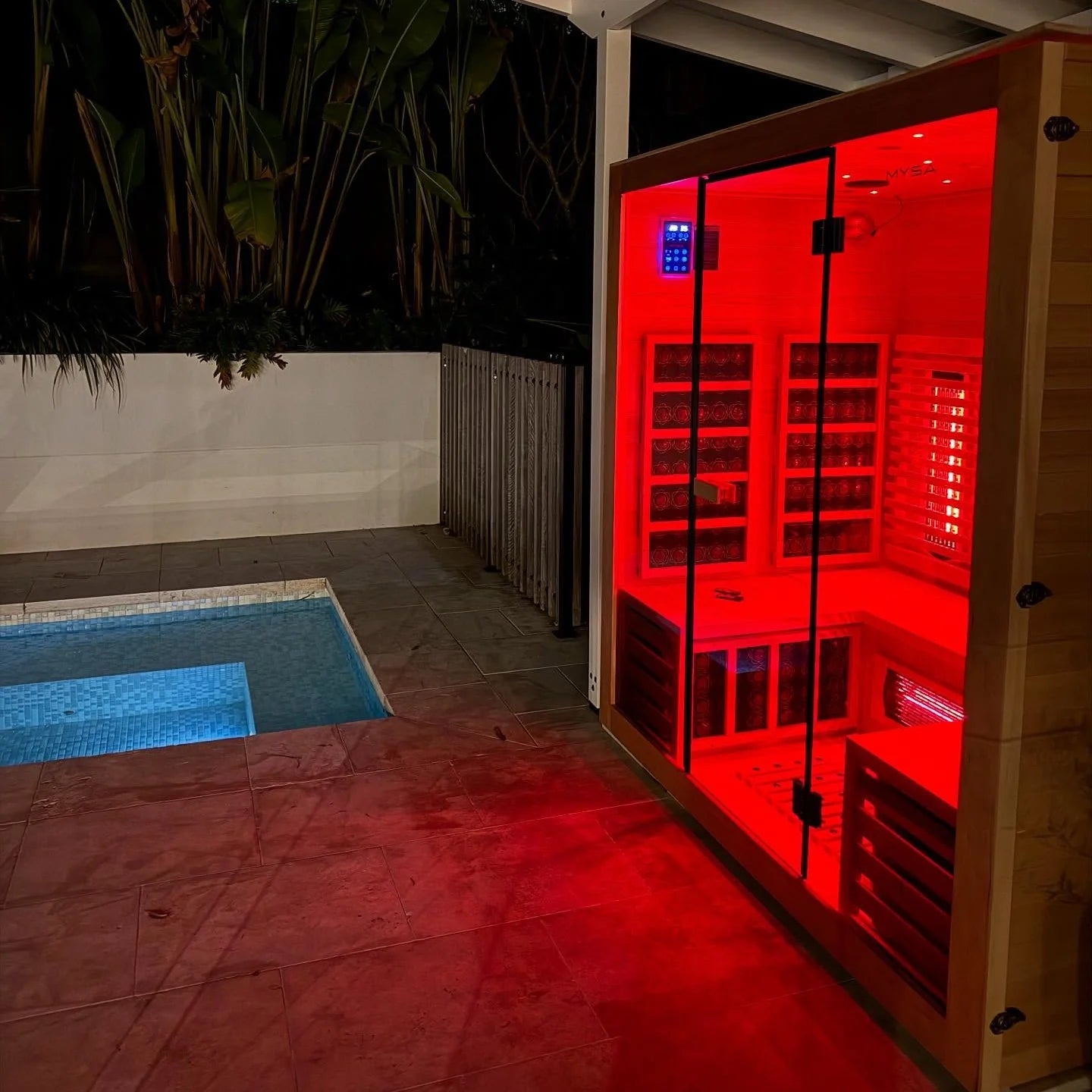
Many modern infrared saunas integrate medical-grade chromotherapy (color light therapy) into the heating chamber. Specific visible light wavelengths complement the invisible infrared heat energy:
- Red Light (630–700 nm): Synergizes with near-infrared light to target skin cells, stimulate collagen, and encourage tissue repair.
- Blue Light (400–470 nm): Targets surface-level bacteria, assisting in skin purification and acne management.
- Green Light (520–550 nm): Promotes mental calm, reduces systemic tension, and helps balance mood states.
Frequently Asked Questions
1. How does an infrared sauna differ from a standard Finnish sauna?
A traditional Finnish sauna heats the air surrounding you to very high temperatures (80°C–90°C), which in turn warms your skin from the outside in. An infrared sauna uses invisible light waves to warm your body directly, penetrating up to 1.5 inches into muscle and soft tissue. Because of this, infrared saunas run at much cooler, more comfortable temperatures (40°C–60°C) while still inducing a profuse sweat and delivering equivalent or superior cardiovascular and recovery benefits.
2. Can using an infrared sauna assist with post-workout muscle soreness and DOMS?
Yes. Infrared waves penetrate deeply into tired muscle beds, widening blood vessels and boosting localized circulation. This heightened blood flow delivers vital nutrients and oxygen needed for muscular repair while expediting the clearance of metabolic wastes (like lactic acid) that contribute to Delayed Onset Muscle Soreness (DOMS) and stiffness.
Incorporating infrared sauna therapy into your weekly routine provides an effective, scientifically validated method for accelerating recovery, enhancing cardiovascular health, and calming the mind. By working with your body's natural physiological responses in a comfortable, low-stress thermal environment, infrared heating offers a gentle yet powerful tool for achieving optimal fitness and balance.